The 2.0 workspace turns scattered commands into a connected system for everyday API quality work.
01 / MANAGE
A searchable test library
Browse scenarios with tags, ownership, lifecycle status, stability, source location, and Zephyr traceability—all backed by Git-friendly workspace data.
OwnershipLifecycleZephyrMulti-root
02 / RUN
Execution that fits the project
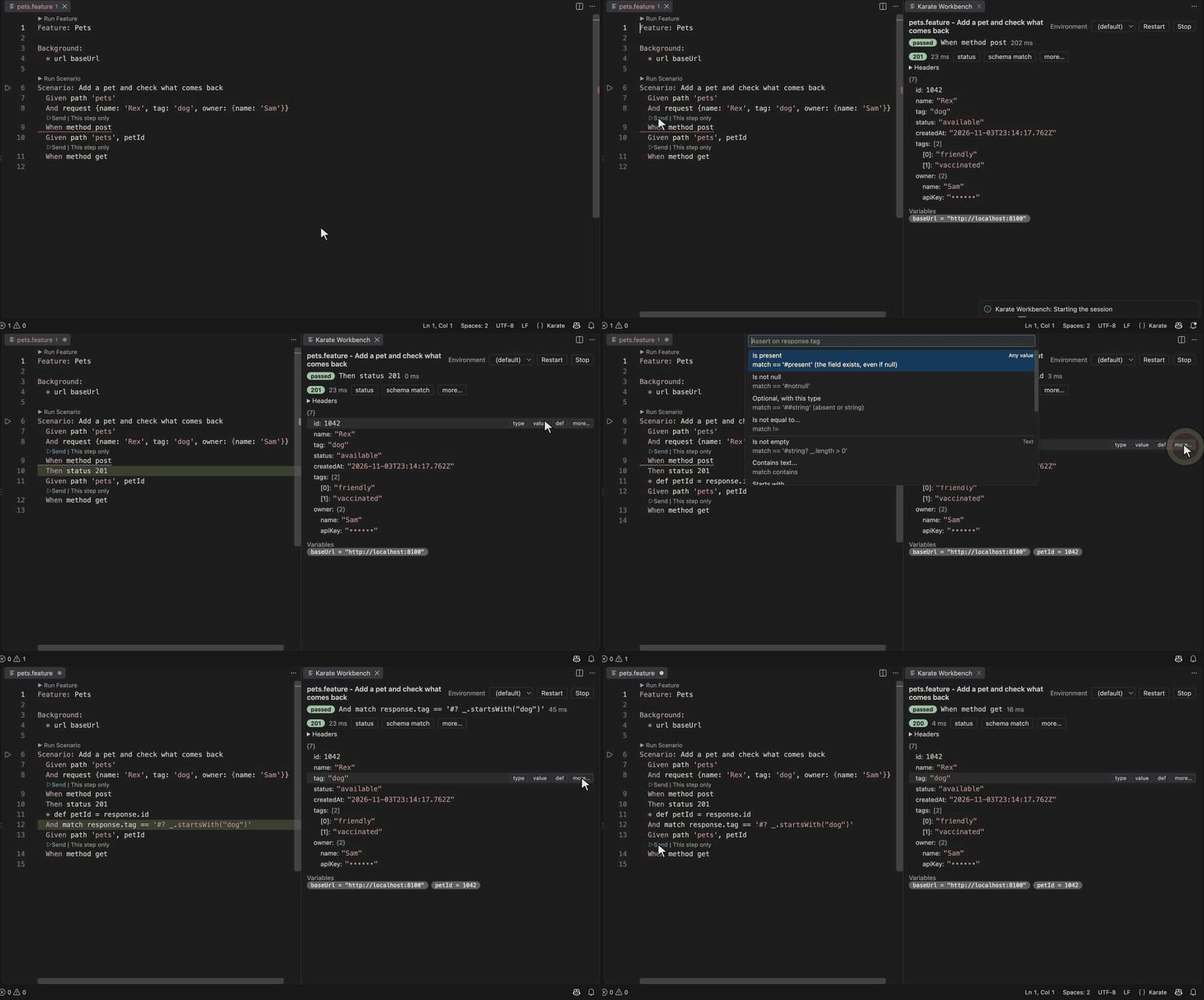
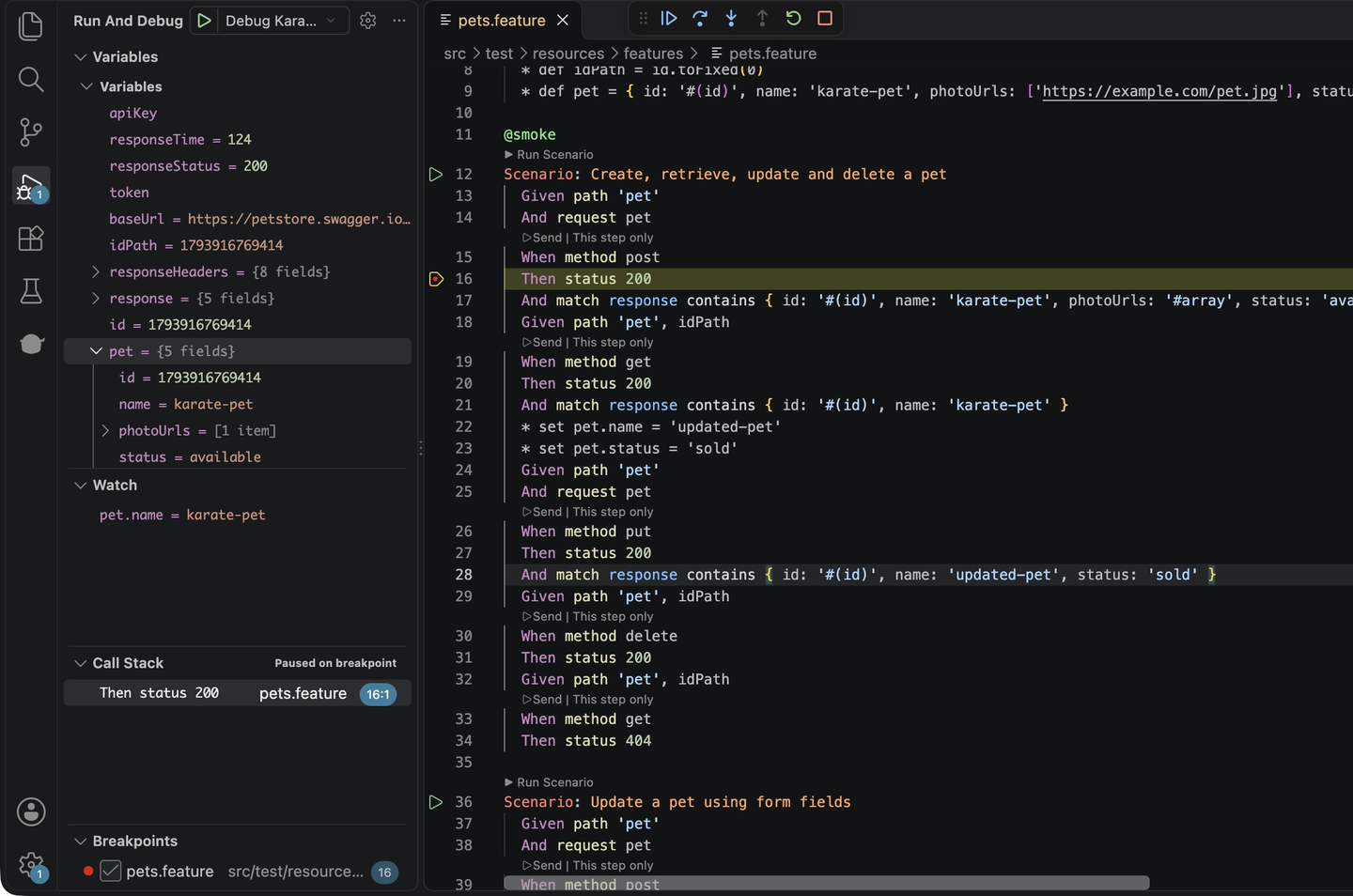
Run a feature, exact scenario, folder, tag set, or saved profile through standalone Karate, Maven, Gradle, or your configured runner. Or step through a scenario in Workbench.
03 / CREATE
From source to Karate
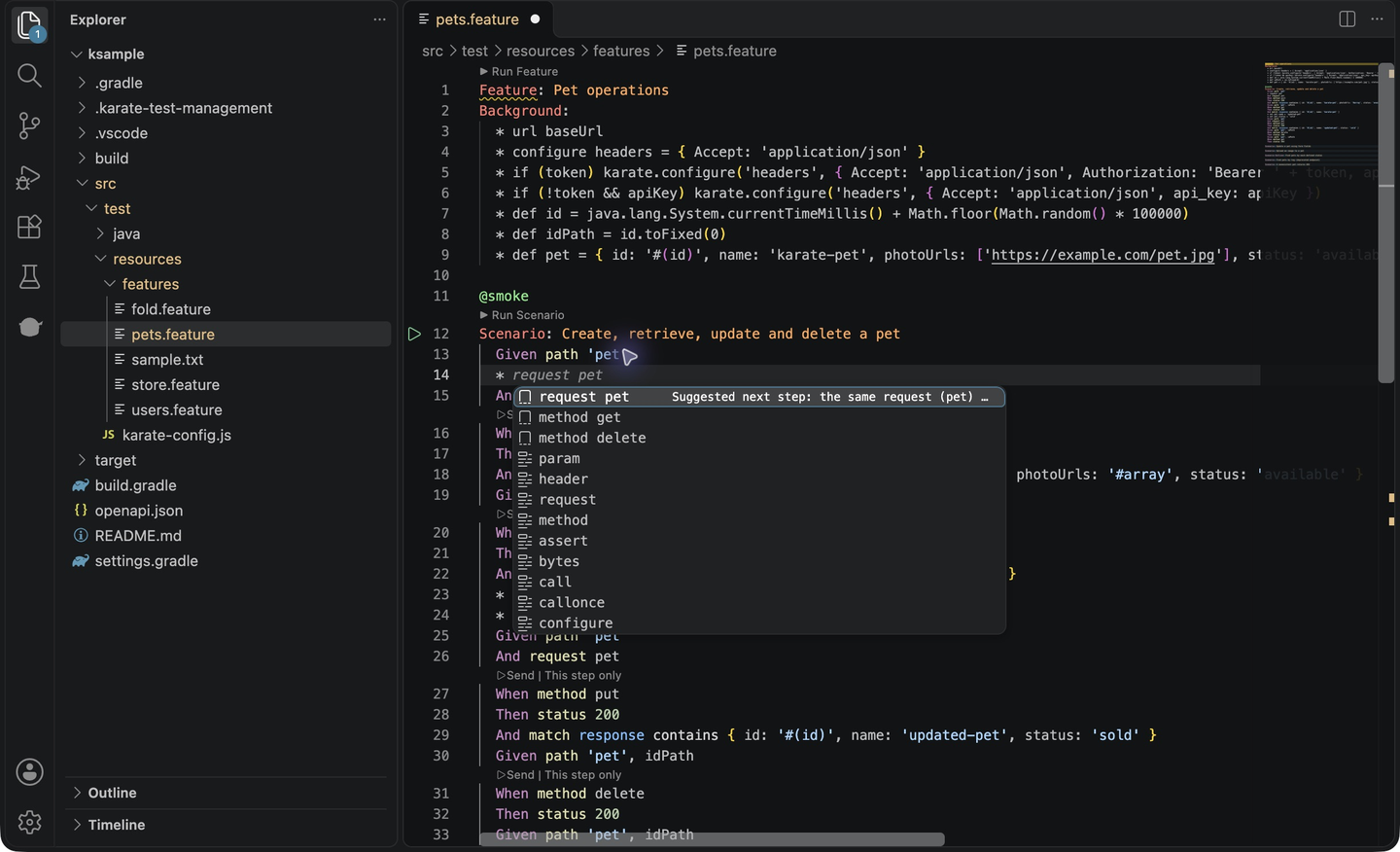
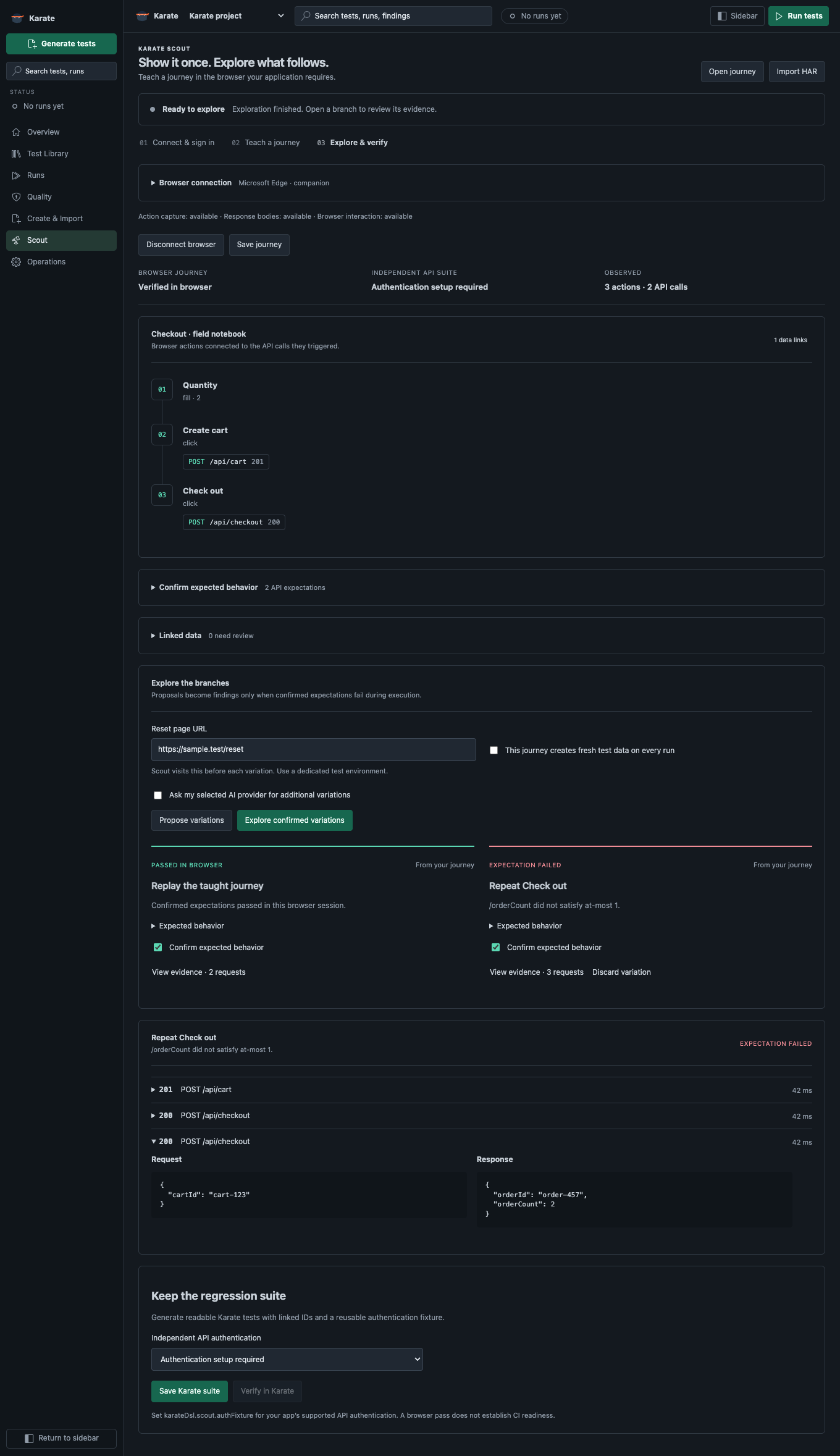
Teach a live browser journey with Scout, or generate from OpenAPI, Confluence, Postman, HAR, GraphQL, Jira, and captured sessions. AI enhancement is optional.
04 / IMPROVE
Quality findings become a workflow
Bring coverage gaps, specification changes, project health, flakiness, execution failures, and Bug Hunter results into one guarded queue.
NewInvestigatingFixedVerified
05 / AI
AI routing without surprises
Choose Copilot, another VS Code model provider, Claude API, or local Ollama. Efficient routing is the default; premium models remain an explicit choice.
Same-provider fallbackLive model discoveryTask-focused prompts
06 / OPERATE
Connected team workflows
Route CI repair work, publish outcomes to Zephyr Scale, expose MCP tools, learn shared styles, and report bugs with redacted diagnostics.